
Celebrating 30 years of Basa with Fernando Gutiérrez
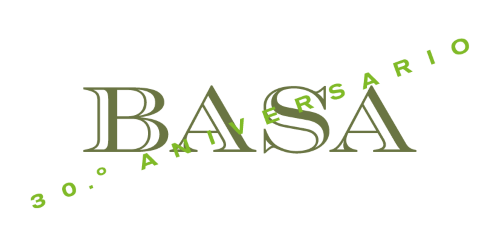
Throughout 2026, we have been proudly celebrating three decades of Basa; a lifetime of effort and hard work.
Basa has always been a fresh, honest wine that speaks of the beautiful Castilian landscape. It has helped Telmo and Pablo on their journey to restore and recover forgotten Spanish landscapes, and our heartful thanks go to all who have helped turn their dreams into reality.
To mark this occasion, Fernando Gutiérrez, the distinguished graphic designer, created a new anniversary edition label, featuring not only the emblematic pine trees of Rueda, but also Telmo´s name.
Telmo started working with Fernando at the very beginning of ´Compañia de Vinos Telmo Rodríguez’. Having originally met through Alberto Anaut and the cultural magazine Matador, he was attracted to the idea of working with Fernando for several reasons. The fact that Fernando is Spanish, but was born in England, and therefore had experience of the English culture, was interesting. Telmo also knew that by working with Fernando, who had very strong links with Spain, he could create an aesthetic that was both authentic and original, without copying from any other countries.
As part of these anniversary celebrations, we interviewed Fernando to reflect on his experience of more than 30 years spent working together.
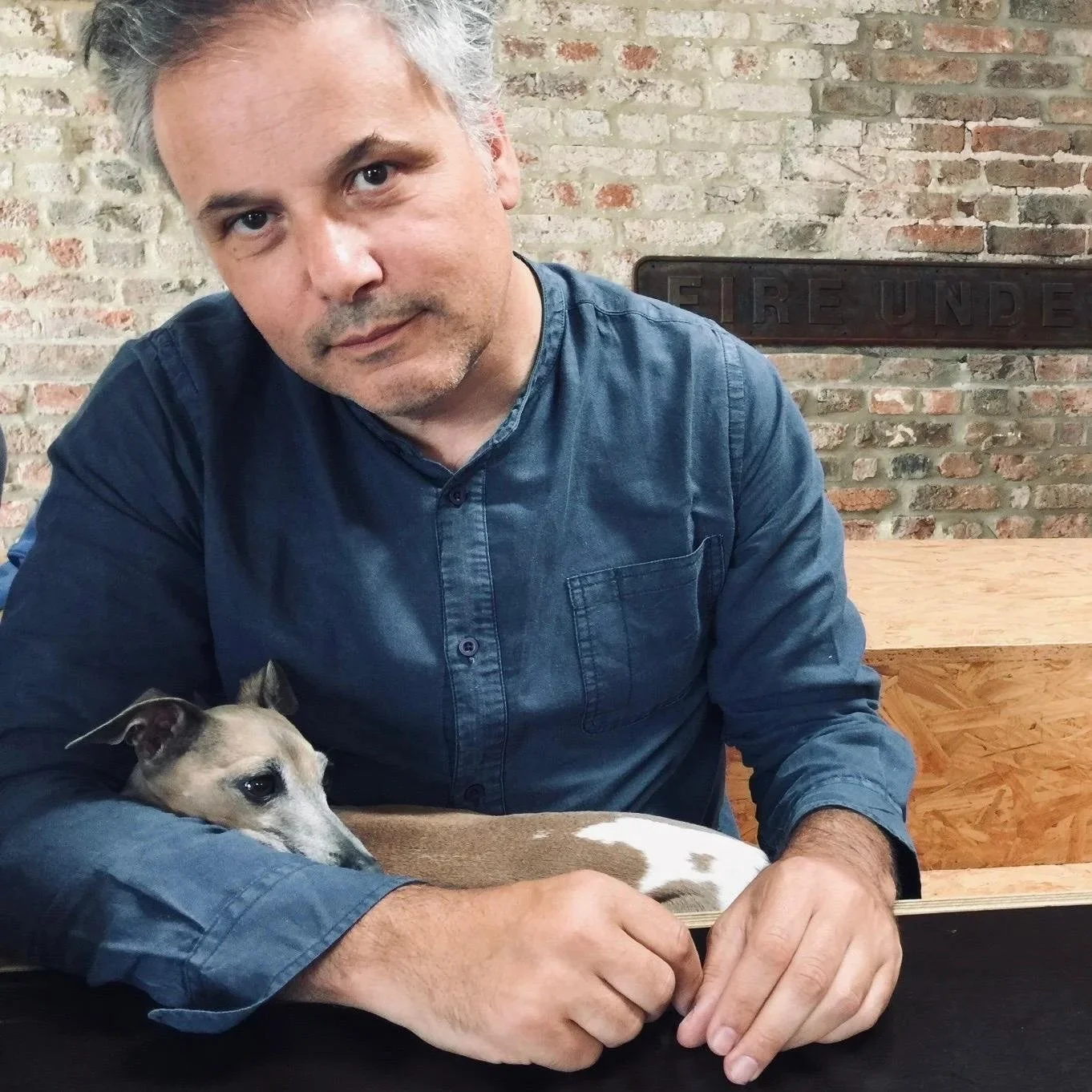
In 1963 Fernando Gutiérrez was born in London to Spanish parents. Growing up in Little Venice, he has fond memories of his childhood and some of his earliest memories include drawing on basement walls and enjoying art lessons.
Having studied his A levels, foundation course and eventually his BA in Graphic Design at the London College of Printing, in 2006 Fernando established his own studio in London, ´The Studio of Fernado Gutiérrez. ´ Throughout his career, he has worked with many high-profile organisations from across the world, including newspapers such as El País, cultural publications such as Matador and museums such as the V&A, the Reina Sofia and the Tate gallery.
In 2014 he was awarded the title ‘Royal Designer for Industry’ (RDI), the highest accolade for designers in the UK. Only awarded to those who have ´demonstrated sustained design excellence, work of aesthetic value and significant benefit to society’, we consider it a great privilege to work alongside him.
Given your family heritage, it is understandable that you have a strong connection with Spain. What is it about Spain and Spanish culture/art that you find so interesting/inspiring?
In 1984, I decided to write my thesis on Spanish Design. Although my culture was Spanish, and I grew up speaking Spanish at home, I was approaching my thesis as somewhat of an outsider, I didn´t really know Spain.
At this time, the country was a desert, very few people knew about the ´real´ Spain – it was known for holidays and little else. This was before Spain was on anyone´s radar, the 1992 Olympics in Barcelona had just been announced and the country was very much still considered up and coming. The announcement of the 1992 World Exhibition was also a huge deal in terms of design, it was a country with a new identity and a new image, everything had to be created from scratch. Democracy was already in motion but very much in its infancy. Businesses started to appear; a scene was building…. it was all so interesting, and so very different to English culture.
Members of my family had different businesses and from very early on, I involved myself in the design aspect. One uncle had a Spanish restaurant in Paddington called Los Remos. It had a fantastic Spanish wine list, I´ve always been interested in wine and know a fair bit about Spanish wine in particular, just from afar.
It never occurred to me to work in Spain; I learnt my trade in London. Eventually, when I turned 27, I thought it might be nice to move to Spain. I went to Barcelona which at that time, was very different to the rest of Spain.
Do you mean in terms of artistic scene, or the Catalan culture?
Everything, in a way, was a bit like England, everything was very organised, their culture is very linked to industry and there was a proper design body. Then there´s the identity and politics thing…. The city was changing, and it was an exciting time. After a brief stint back in London, I returned once more to Barcelona, where I founded ´Grafica´ with Pablo Martin in 1993. Two years later I co-founded Matador in Madrid.
You work across such a wide range of projects, and with such varied organisations. Where do you find your inspiration?
Who you work with is really very important. It’s not like an artist where you work on your own, my inspiration comes from the people I collaborate with. It has nothing to do with me being inspired or not. Ultimately, I pick up on things, I resolve problems… I always try and communicate what makes the project special.
This was the case with Matador, for example, any project I worked on with Alberto Anaut was very meaningful for both of us, we were always on the same wavelength. That´s how I like to work. It´s organic and looking back now… we just got on and did it.
How does that way of working translate into working with wine? Is it the same approach?
Whatever I do, whoever I work with, the most important thing for me is that everyone feels proud of the work. It has to be something you connect with. For me, wine is editorial, and wine labels are like book covers. If you have a good publisher, there´s consistency… they can be part of a series or range but they all have their own character. And you have to work out how to promote them. Everyone has their own approach and it isn´t about good or bad design – you have one opportunity to hit the target.
How and when did your relationship begin with Telmo? And how does it feel to have joined him on his journey across Spain?
The idea with Matador was to offer each subscriber a Spanish wine. The first we offered was Marques de Griñón, and the second wine was from Remelluri. When we approached them, Telmo´s father (Jaime Rodríguez) handed the discussions over to Telmo. This was in the early 1990s, and Telmo was just starting up his own project. He agreed for Remelluri and Matador to start working together on the condition that he could meet me and that we could work together on his personal project, ´Compañia de Vinos Telmo Rodríguez. ´
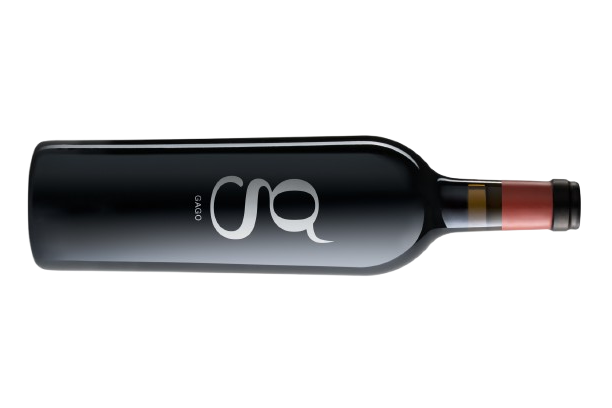
One day an opportunity came up, I met with Telmo and eventually created a prototype of Gago, which I sent to him in the post. The design became something tangible, something real and I was very lucky that he liked it, because the work had already been done.
Gago´s minimalist, no-label design has been highly celebrated as a masterclass in packaging simplicity. What inspired you to create such a striking design?
There wasn´t a process, it is about how you feel at the time. Gago is printed directly on the bottle, using white ink; a very route A design. It could have backfired completely. It also looks like a bull on its side. I´m always led by Telmo and his vision.
And here you are, more than 30 years on! How does it feel?
When I sent that first bottle to Telmo, I never dreamt that our relationship would continue as it has! But he kept coming back to me with new projects. I´m really proud to be involved.
It´s been a good evolution, nothing over the top, every decision is very measured. And that´s what I like about working with Telmo, he doesn´t get carried away and he has always maintained the focus on quality. He makes common sense decisions. In a way, all the hard work has been done, he´s created an authentic identity and it´s all been done with a lot of patience.
These days, there´s much more competition in wine than before. When I work on a new design, it´s not just another label, I want it to be something different, something that stands out and feels good. What is most important now is credibility, creating a wine that showcases its origin and terroir.
I like how our journey is evolving, there´s a lot to do and communicate. I´ve met with a lot of Telmo´s team, people who want to do good work. It´s essential to bring young people in, and they´re doing a great job. We´ve had a lot of fun.
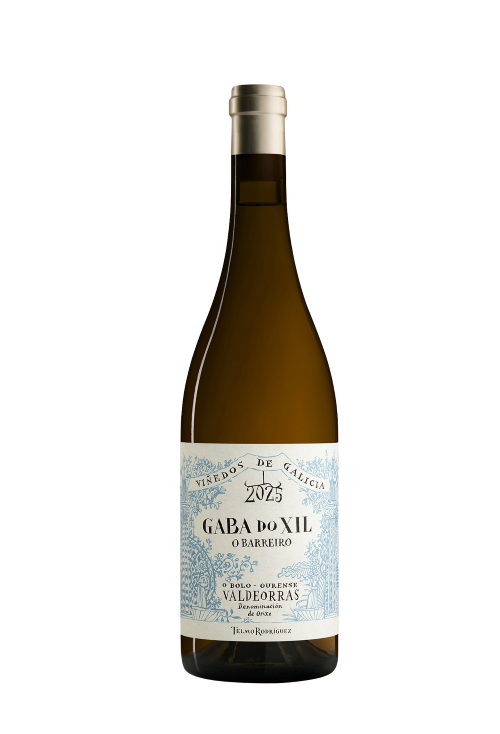
The labels for our project in Valdeorras, Ladeiras Do Xil, also receive their fair share of compliments. What can you tell me about their design process?
Just the other day I was enjoying a bottle of Gaba do Xil O Barreiro in a marina in Alicante, it´s a great wine and the label design and packaging really compliments it.
The design is the direct result of a phone call I had with Telmo. He rang me one day and he was so inspired and convinced by the project in Valdeorras, it was as if he had seen some sort of apparition. The conversation was all very abstract… he likes his history and his archeology, and he was talking about Romans and churches… he can describe a picture so well. It´s not always easy to translate his vision onto the label, but it is an inspiring way of working.
I work closely with a group of specialists, and it became clear that this project was perfect for the artist Jeff Fisher, it fitted his style.
What are you looking forward to in the future?
I’m excited about putting my knowledge into practice. I just want to do the work to the best of my ability, it’s not about working on big projects, I´m not interested in that. I´ve done that. I want to do work that is done well, properly, and looked after. I want to help sell the product, tell its story and produce something genuine.
This online interview took place between Fernando Gutiérrez and Laura Cowburn (Head of marketing and communications) on the 8th of October.